
Essential Legal Checks Before Buying Land in Bangladesh
Buying land can be a significant personal or financial decision. However, a plot that appears attractive or reasonably priced may still involve ownership complications, inaccurate boundaries, unpaid taxes, or restrictions on transfer.
For anyone considering land for sale in Bangladesh, careful verification is essential. A systematic review of the relevant documents and the physical property can help identify potential problems before a transaction proceeds.
1. Confirm the Seller's Ownership
The first step is to establish whether the seller legally owns the land and has the authority to transfer it.
Request the relevant registered deed and examine the history of ownership. Where necessary, obtain certified copies from the appropriate registration office rather than relying only on photocopies supplied by the seller.
If the land has passed through several owners, the previous transfers should be examined to establish a consistent ownership history.
For inherited or jointly owned land, additional documents and consent or authority may be required, depending on the circumstances.
2. Check the Khatian, Dag Number, and Mouza Details
Land records help identify a particular parcel and its recorded ownership information. Buyers should compare the relevant khatian, dag number, mouza details, land area, and maps with the information provided by the seller.
These details should also be checked against the actual location of the land.
Do not assume that a document relating to a similarly described parcel necessarily establishes ownership of the exact plot being offered.
3. Review Mutation and Land Development Tax Records
Mutation, commonly called namjari, is an important part of land record administration. Review the applicable mutation records and current land development tax receipts.
However, a mutation record or tax receipt should not be treated as a substitute for a complete title investigation. The underlying ownership documents and transaction history must also be examined.
Confirm any outstanding tax obligations or record discrepancies with the relevant land office.
4. Inspect the Physical Property and Boundaries
Visit the land and confirm that its location and boundaries correspond to the relevant documents and maps.
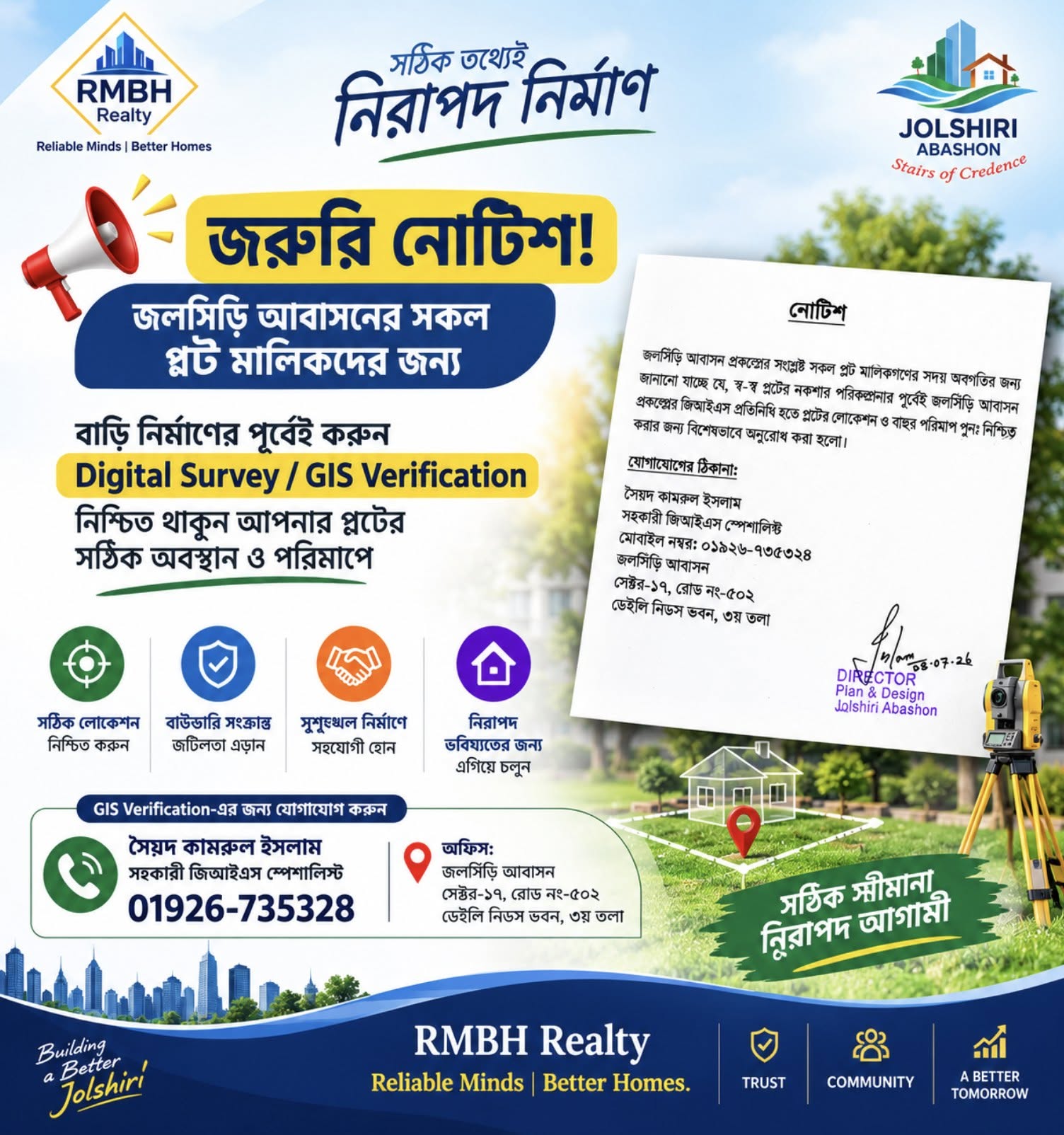
Where appropriate, arrange for a qualified surveyor to help establish the actual plot boundaries and land area.
Check access roads, adjoining properties, existing structures, occupation by other parties, and any visible boundary disputes.
A site visit is particularly important when a plot is marketed remotely or when the buyer cannot easily distinguish it from neighbouring land.
5. Investigate Disputes, Mortgages, and Transfer Restrictions
Before purchasing, investigate whether the land is affected by litigation, competing ownership claims, mortgages, prior sale agreements, government acquisition, or other restrictions.
The relevant checks depend on the property's history and legal status. Consult the appropriate offices and obtain independent legal advice where necessary.
If the seller is acting through a power of attorney, verify that the document is valid and authorises the proposed transaction.
6. Be Careful With Unusually Low Prices
A price significantly below comparable properties may justify additional investigation. It could reflect differences in location, access, land classification, documentation, or other factors.
Compare similar properties, assess the actual condition and location, and establish whether the seller's claims can be independently verified.
Avoid making a substantial payment solely because the seller claims that an offer is available for a limited time.
7. Understand the Agreement and Registration Process
Before signing a sale agreement, ensure that the land description, price, payment terms, completion deadline, responsibilities, and relevant conditions are clearly recorded.
Bangladesh's Registration Act contains requirements relating to written and registered contracts for sale of immovable property. Buyers should confirm the applicable requirements and deadlines with a qualified lawyer or the relevant registration office.
Keep proper records of payments and obtain the appropriate registered documents.
8. Complete the Necessary Post-Purchase Formalities
After completing the purchase, obtain and safely store the relevant registered deed and supporting records. Complete applicable mutation procedures, update the relevant records, and pay land development tax as required.
Confirm possession and maintain clearly documented boundaries. Keep certified copies and transaction records in a secure place.
Conclusion
A careful land purchase begins with verification, not payment. Buyers should establish ownership, match the documents to the physical plot, review relevant taxes and records, investigate disputes, and obtain professional legal advice before committing.
RMBH Realt can use this educational guide to help prospective buyers understand the questions they should ask when exploring land opportunities in Bangladesh.
Call to Action: Before proceeding with a land purchase, organise your documentation and seek independent verification. Contact RMBH Realt through its official website to enquire about its available real estate services.